Improving welfare and control together: pigeons and geese
Pigeons and geese are abundant in many urban landscapes in B.C., living and nesting in city centres, parks, and beaches.
Both species have a long and interconnected history with Canadians, with domesticated pigeons serving as couriers during the World Wars, while the Canada Goose is an important internationally recognized symbol of Canada. Despite this history, pigeons and geese are often stigmatized as “pests”, due to their droppings and nesting behaviours in areas that are important to their human neighbours.
As urban bird populations are here to stay, it’s important to coexist humanely and manage our avian neighbours with an eye for protecting their welfare.
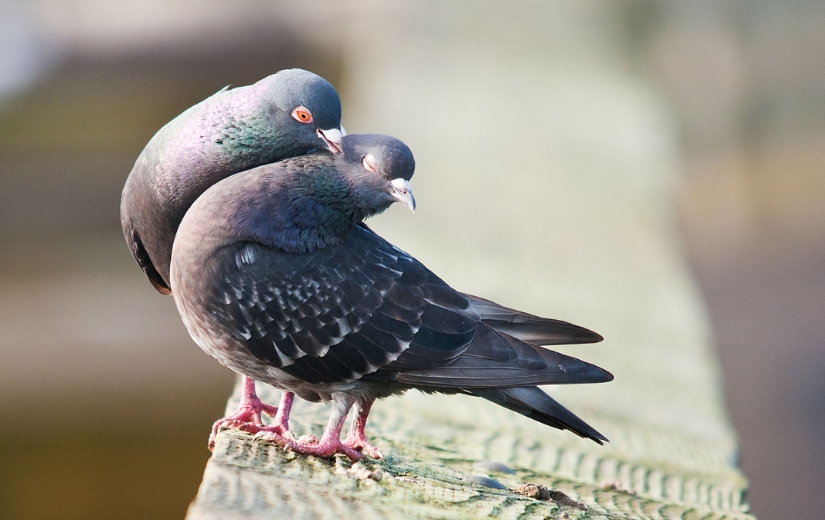
Is it possible to protect the welfare of pigeons and geese while managing control?
Fortunately, there is a way to achieve both aims together.
Recent research out of Brazil by Goncalves et al. (2025) has shown that pigeon behaviour and welfare can differ within the same city depending on the population’s location within the city.
Pigeons living on a less urbanized university campus were compared with those living in the city centre. Pigeons in the city centre showed higher levels of seeking/exploration and fear behaviours, as well as more instances of foot injuries from entanglement in human debris and garbage.
In contrast, pigeons on campus showed more natural dominance behaviours reflecting more stable food sources, fewer injuries associated with human pollution, and more maintenance, reproductive, and parental behaviours. The population density of the pigeons on campus was also less than the city centre.
These findings reinforce the need for location-specific avian management strategies. Pigeons in high-density city centres had more welfare concerns compared to those found in the more natural, less urban areas. Therefore, using humane control methods, like exclusion or avian contraceptives, resulting in fewer birds, will improve the welfare of urban pigeons while also mitigating human-pigeon conflict.
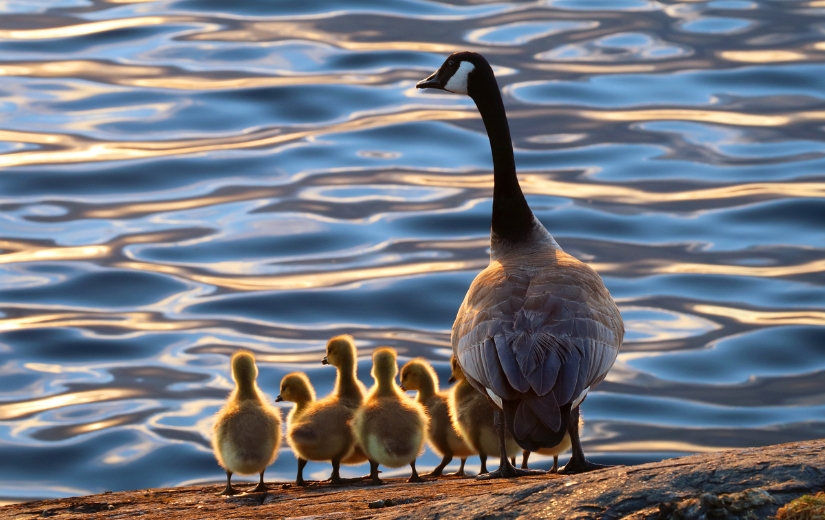
Similarly, urbanization is creating large grass lawns that are ideal habitat for Canada geese nesting, and the location near people means fewer predators. This has caused greater numbers of grassland-loving geese to migrate less and choose to stay in local parks or other urban areas year-round, resulting in conflict and communities to consider lethal methods for control.
Instead, effective and welfare-promoting strategies for managing geese should be used early on, such as humane hazing before geese establish territories or begin nesting, and modifying habitat to encourage geese to settle elsewhere. A humane coexistence strategy would also designate areas where geese can settle without harassment, and discourage feeding by the public through the creation of bylaws and public education.
A coordinated approach for success
For both bird species, a coordinated approach to control with regional districts, local governments, and First Nations, using multiple strategies, based on location-specific needs are crucial for successful outcomes that benefit humans and protect animal welfare (e.g. Dubois et al., 2017).
Dubois, S., Fenwick, N., Ryan, E.A., Baker, L., Baker, S.E., Beausoleil, N.J., Carter, S., Cartwright, B., Costa, F., Draper, C., Griffin, J., Grogan, A., Howald, G., Jones, B., Littin, K.E., Lombard, A.T., Mellor, D.J., Ramp, D., Schuppli, C.A., & Fraser, D. (2017). International consensus principles for ethical wildlife control. Conservation Biology 31(4): 753-760. https://doi.org/10.1111/cobi.12896
Gonçalves, E. H., de Farias, R., de Oliveira Franco, J. D., Taconeli, C. A., & Molento, C. F. M. (2025). Behaviour and welfare of pigeons (Columba livia) in two different localities of Florianópolis, Santa Catarina, Brazil. Applied Animal Behaviour Science, 287, Article 106640. https://doi.org/10.1016/j.applanim.2025.106640
Also for you:
- Pigeons in your area? A guide to pigeon control methods
- BC SPCA’s involvement in one of the first studies evaluating OvoControl P® in Canada
- Pigeons near you? Read the Best practices for pigeons (PDF)